What the battery does
Power and capacity are decided before anything is ordered, from the site's own consumption.
Sized from the site's own data
Power in kW and capacity in kWh come out of twelve months of interval data from the meter. The sizing in the analysis is the sizing quoted in the proposal.
Capacity follows the load
The battery is built from modules. Options for later expansion depend on the selected configuration and are confirmed in the proposal.
Covers the expensive hours
The battery supplies part of the site load during high-demand periods, reducing the peak measured at the grid connection. The effect on the bill depends on the tariff.
Charges when energy is cheap
Charging is planned from electricity prices, the site tariff, expected load and battery limits. Charging losses are included in the calculation.
Releases connection capacity
A battery can supply part of the demand from new equipment during short peaks. Whether this avoids a larger connection depends on the size and duration of the added load.
Delivered as a working installation
Cabinet, inverter, metering, electrical work, connection to the Node and commissioning are part of the delivery.
What the installation includes
Cabinet, inverter, metering, electrical work, connection to the Node and commissioning are included in the proposed scope.
Space and site access
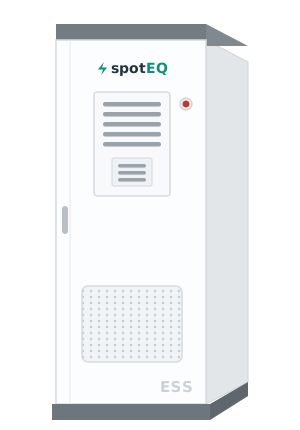
The battery is installed in an indoor floor-standing cabinet. Dimensions, weight and cooling requirements depend on the selected configuration and are provided with the proposal. Installation access and any interruption to supply need to be agreed with the site.
Power and capacity
Power determines how much of a peak the battery can cover. Capacity determines how long it can do so. Both are stated in the proposal, together with the operating range of the selected battery.
Adding capacity later
The system uses battery modules. Expansion depends on the selected battery, inverter and available space; we confirm the options for the proposed installation.